


- Details
- Written by Super User
Pearl Harbor was attacked twenty four years before I was born. Each year, when December 7 rolled around, I heard the many exhortations people made to never forget what happened on December 7, 1941. I learned about the attack in school. But It, along with all of WW II, seemed like distant history. Although I tried to be respectful and honor the memory of Pearl Harbor, it honestly didn’t affect me at all. I wasn’t moved at all by the shocking horror of the tragedy. As something that happened in what seemed to me to be the distant past, the events of December 7, 1941 didn’t move me any more than the collapse of the Roman Empire, the Hundred Years War, or the French Revolution.
This Spring, I had the opportunity to go to Normandy. The hardest movie I’ve ever watched is Saving Private Ryan, especially that opening scene of the D-Day landing on Omaha Beach. According to D-Day vets, that opening scene captures the horror they experienced better than any else they’ve ever seen. Standing on Omaha Beach, imagining D-Day with the images from the movie playing in my head, was overwhelming. I couldn’t process the enormity of all that took place there. The number of soldiers who died on that beach that day was too staggering, the sacrifices they made too enormous. I wanted to cry. But I couldn’t. It was too big to absorb.
- Details
- Written by EJ Sweeney

In my last blog, I addressed the question of whether or not the earliest Christians believed in the Trinity. Referencing the second person of what I’m calling my “Trinity of Scholars”, Raymond Brown, I showed that, given the developments we find in the New Testament, they must have. The time required for them to take their earlier, shared understanding of the Holy Spirit—and His relationship to the Father and the Son—in the very different directions that we find clearly evident in the New Testament means that this understanding had to be alive and well in the Early Church prior to the writing of the New Testament.
- Details
- Written by EJ Sweeney
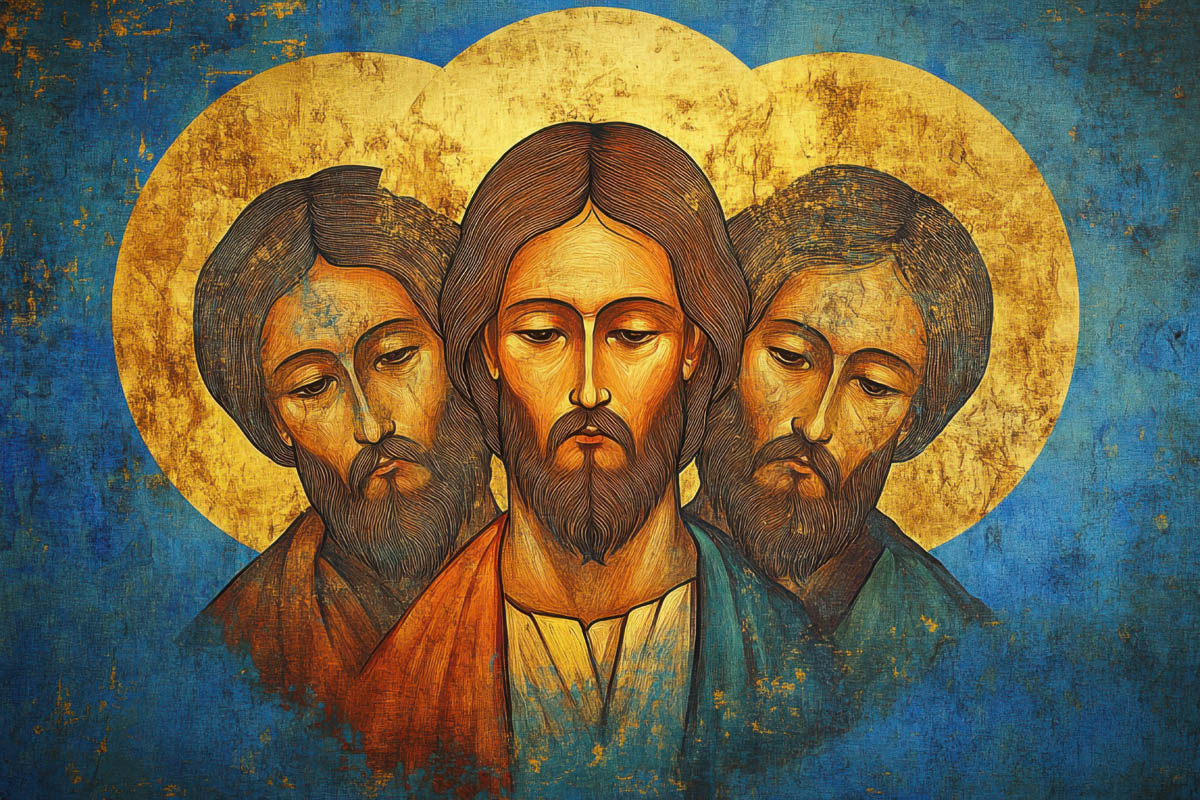
In my last blog, I addressed the question of whether or not Jesus ever talked about the Trinity. And to that very simple question, the unequivocal answer is: No! He never used the word “Trinity” itself. The term “Trinity” only surfaces about two centuries later as shorthand for the Church’s belief that the One God is Three Persons, the Father, Son, and Holy Spirit.
- Details
- Written by EJ Sweeney

In the name of the Father, and the Son, and the Holy Spirit, Amen. Growing up Catholic, this was the first thing I was taught—to make the sign of the Cross while invoking the Father, the Son, and the Holy Spirit, otherwise known as the Trinity. The reason this is the first thing most Catholics are taught is because the Trinity is the most important belief in Christianity. The reason it’s the most important belief is because Christians believe it reveals the deepest truth about God, God’s actual identity. Who God really is. Everything else Christianity claims about God depends upon and flows out of this core doctrine which says that God’s innermost being is Tri-Personal, One God in Three Divine Persons, Father, Son, and Holy Spirit.
- Details
- Written by EJ Sweeney

Have you ever had a “fair-weather” friend? You know, the kind that pledges their unfailing loyalty to you. Promises to be there for you through thick and thin. Proclaims their undying love for you. But then, the moment the going gets tough, they get going. The kind of friend that, when you need them most, when you need them to be there for you, they’re nowhere to be found.
- Details
- Written by EJ Sweeney

Many years ago, I was channel surfing and stumbled upon an episode of Dr. Oz that was focusing on the health benefits of prayer. Dr. Oz had assembled a panel of experts who presented research showing the significant effects prayer has on both physical and mental health. While, as I recall, most of the episode was focused on petitionary prayer—asking God for health and healing—it also did address prayers of any kind, including thanksgiving. The research they had up to that point showed that praying in any way, including giving thanks to God can have a significant positive impact on your well-being, that an attitude of gratitude is good for your physical and psychological health.
