


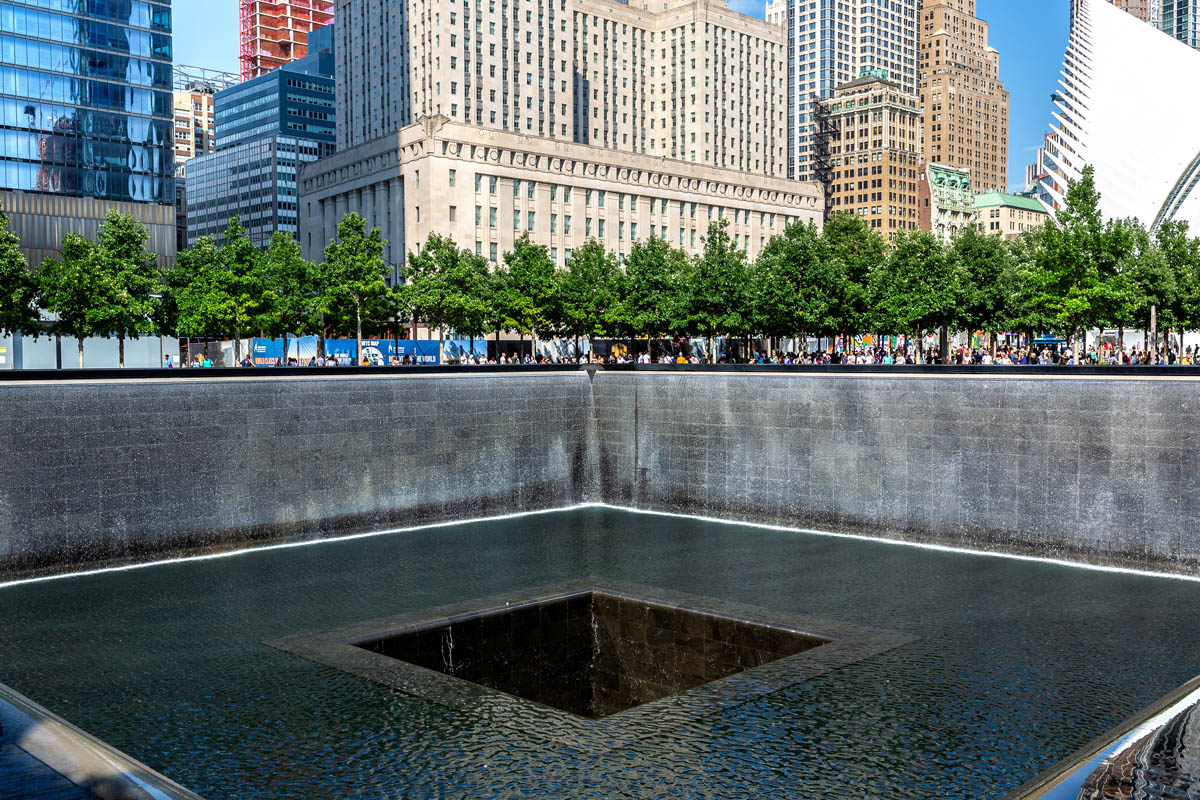
This Wednesday marks the Twenty-Third Anniversary of 9-11. As I’ve mentioned before, the only other thing I ever wanted to do with my life besides what I’m doing now was to be a New York City Firefighter. If I had two lives, that’s what I would do with my second life. When I was teaching, I was blessed to have a student whose uncle happened to work in one of the busiest ladder companies in New York, Ladder 120 in Brownsville Brooklyn.
He arranged it so that I could go down and ride with his uncle. This was back in the late 80’s and early 90’s, the tail end of FDNY’s so-called “War Years”, when there were a ton more fires than there are now. Even though I couldn’t actually fight fires with them, besides learning a lot of tricks I could use back home as a volunteer firefighter, watching them enabled me to vicariously experience some of the thrill of my dream of being a New York City firefighter.
So on 9-11-2001, I knew a lot about how the FDNY and how they operated. Moreover, as a firefighter, I was aware of the history of fires in high-rise buildings, especially the fact that no high rise building had ever collapsed as a result of fire. There was a famous high-rise fire in the early 80’s in Philadelphia at the Meridian plaza. Because of issues getting water up the standpipe, they had let the fire burn itself out. It burned for several days. But the building was still standing. And in the first terrorist attack on the World Trade Center in 1993, the bomb that created a massive crater in several levels of the underground parking garage failed to bring the towers down.
Glued to the TV on that day, watching both towers burn, I knew an unspeakable tragedy was unfolding before my eyes. I knew that there were already hundreds of casualties and were likely going to be thousands more, especially with all the people trapped above the fire. I knew that there might even be some firefighter fatalities during what I presumed to be a prolonged and very dangerous high-rise operation.
But the one thing I never imagined was that those towers would collapse. When I saw the first tower fall, I was stunned. I couldn’t believe my eyes. And I couldn’t move from the TV. Like everyone else, I realized at that moment that I had just watch thousands of people die right before my eyes. And like all firefighters watching, I realized that I had just watched the equivalent of a Fifth-Alarm Assignment, nearly two hundred firefighters, make the ultimate sacrifice.
Frozen in shock before the TV, I braced myself for the next forty-five minutes or so until the second tower collapsed. Even though, like everyone else, I realized it was now inevitable, I couldn’t believe it when it too collapsed. Even to this day, even after watching videos of the collapse all these intervening years, I have trouble believing it happened. The whole thing still seems surreal. Like a movie. Like a bad dream.
The only thing that shook me out of my shocked stupor watching the towers collapse was that, a few minutes after the second tower collapsed, my volunteer fire department received a call for a motor vehicle accident on the highway. So I responded to the firehouse and jumped on the rig. Even though the call came in as a possible extrication, it turned out to be a minor accident and we were quickly dismissed.
I will never forget how I felt sitting in the back of the rig on the way back from that call. One of my good friends, a friend who I often went with to New York to visit different firehouses, ride with some of the companies, or just “buff”—the firefighting term for going to watch other departments operate at fires—fires in the Bronx or Brooklyn; a friend who, like me, had friends on the FDNY who might have been there, was sitting next to me. Usually, I can see the “silver lining” in any situation. Even when things are falling apart, I can find something positive to say about it.
But in the midst of what just happed that day, I had nothing. All I could do was look at him and shake my head. And when I could finally find words, all I could talk about was how much this sucked. Riding back from that call the morning of 9-11 is etched in my memory. In all my life, I have never felt so hopeless.
The only thing that got me through 9-11—the only thing that gets me through anything in life—is my faith. Because, while we were able to find good things that came out of that tragedy, we almost needed to as a nation, to believe in the goodness that was still there somehow—the truly heroic deeds and selfless sacrifices displayed by so many, seeing the best of humanity in the midst of the worst humanity can do, the unity we felt as a nation, the way people were kinder to one another as a result, and so forth—all that was a good that came out of that tragedy.
But if we’re honest about it, that good doesn’t overwhelm the evil that was done. The tragedy that 9-11 was. The overwhelming enormity of it. That good doesn’t justify the evil that happened. It wasn’t a greater good to come out of that evil. Those were relatively minor goods compared to the horror, the hopelessness of that tragedy.
That day was truly hopeless.
I think one of the things that is most misunderstood about Christianity is that people often talk about God allowing evil in order to bring about a greater good. Then people go on to tell these wonderful stories that all work out in the end, where they can look back at their lives and see the good God brought out of a situation that, at the time, they couldn’t understand why God would allow.
It is often said that God permits evil only to create some greater good from it. And I often hear people of faith talk about how the most difficult times in their lives turned out to be the best thing for them. How, even if in the moment they couldn’t understand why God was allowing this to happen to them, in retrospect, often years later, they could see how it led to a far greater good in their lives.
But with 9-11 it doesn’t work like that. With many situations and circumstances in our personal lives it doesn’t work like that. We look back at things that have happened and we can’t find a good that comes out of it. Or at least a good that would make it worthwhile, a greater good that somehow justifies those things happening.
From our perspective, from an earthly point of view, there was no greater good, no good that could make up for what happened. Certainly no good we could see coming out of it that would justify a Good God allowing it to happen. From our perspective, from an earthy perspective, there was and is no hope. No reason we can see for God to allow such an unspeakable tragedy.
But that’s not the Christian message. The Christian message is not that you will see later on down the road why God let bad things happen to you. That’s not the point. That’s not what Christian revelation says. That’s not what Jesus said.
In fact, in Matthew 12:38-40, when the scribes and Pharisees demand a sign from Jesus to prove he has divine authority, Jesus responds by saying that no sign will be given, but this: This is the only sign, the sign of Jonah. Just as Jonah spent three days and three nights in the bowl of a whale, so the Son of Man will spend three days in the bowls of the earth. What Jesus is doing here is speaking in a prophetic way about his death and resurrection.
So what Jesus is saying, what Christianity is saying, is that the only sign that we’ve been given, the only sign that we have that there is a greater good to come out of evil, out of horrors like the horror of 9-11, hopeless horrors, horrors that even if we look back and find some good to come out of it, it doesn’t come close to justifying why God would allow something like that, the only way we will see the greater good is if we look at what happened in Jesus’ death and resurrection.
We will not see the greater good, necessarily—sometimes we do, but many times we don’t; we won’t see the greater good until we see it from God’s eternal perspective. And the one sign we get that this is true, that it will work out, that it will be a greater good, is the sign of Jonah, Jesus says, which is a reference to Jesus’ own death and resurrection.
The tragedy and hopelessness of Good Friday—and sometimes this story is so familiar to us we don’t feel it to the depth—but if you remember 9-11 and how hopeless you felt that day, the disciples of Jesus felt a lot more hopeless at his crucifixion, it was a lot more horrific even than the events of 9-11. And in the midst of that hopelessness, for the three days that he was in the tomb, they could see no good that could come out of this, let alone a greater good that could come out of that event.
But when Jesus rises—and again, this is something that because we are so familiar with the story we miss the impact of it—he doesn’t just rise from the dead and come back the way he was. He doesn’t just return, restored to life the way his life was before. He comes back transformed—to the uttermost. He’s transformed to the transcendent sphere. He can appear and disappear. He defies all the limitations of space and time. He is no longer bound by them. He has qualities of a different realm, a transcendent realm.
What happens in his resurrection is that he takes the horror, the hopelessness, the tragedy of Good Friday, as bad as it gets, and transforms it into something beyond anything anybody could imagine, far more glorious, beautiful, and sublime than even the greatest hopes people had at the time about eternal life.
And what that tells us is that from the eternal perspective, when God looks at things like 9-11, the reason he lets them happen. is because he has an infinitely greater good—not just a relatively greater good—in mind. Not a greater good that sometimes we get to see when we look back at our lives and understand why God allowed something to happen because things worked out better in the end precisely because that bad thing happened.
No, I’m talking about an eternal good, a good that our minds can’t even begin to fathom. As Paul puts it: “No eye has seen, no ear has heard, nor has it so much as dawned on the minds of humans what God has in store for those who love him.” (I Cor 2:9 ) For those who love God, the good that God has in mind in allowing things as hopeless as 9-11, as hopeless and tragic as the cross of Jesus, is this utter transformation, this infinite transformation. Actually taking that suffering and using it to somehow enhance, to transform the glory that we will experience in eternity.
Clearly, I can’t explain how that works. I have no idea because my finite mind can’t fathom it. But I know it’s true. I know it’s true because I know that Jesus rose from the dead. And if he rose from the dead, then that sign, the sign of Jonah, is all that we need to have hope, even in the midst of the most hopeless circumstances, where try as we might we may be able to find no good that comes out of it.
One of the most vivid memories for me of 9-11 was the woman who appeared in one of the towers above the fire and knowing that she wasn’t going to get out of this alive, unlike a lot of other people who were trying to scratch and claw and hang on until the last minute and then in utter exhaustion had to let go, or overcome by the smoke had to let go and were jumping off or falling off the tower, this woman gets out on the ledge and then opens her arms wide like she’s about to fly and then leaps into what is her death.
And in that moment, it’s utterly tragic. As we look at it from a finite, human, earthly perspective, we think: How sad. How horrific. How hopeless and tragic. She’s leaping to her death. Valiantly. Defiantly. As if she’s flying off the tower, as if she’s jumping off to fly into the sky. She’s doing it valiantly, heroically in some sense, as if she’s defying what’s about to happen. But everybody knows that she’s going to plummet to her death like everybody else did who jumped or fell from the tower that day.
But from the eternal perspective…What happens in that moment from the eternal perspective, is that she is leaping into eternity. In Christ, she leaped into eternity. I don’t know what her faith was. If I remember this right, I think she made the sign of the cross over herself before she leaped. So, if she had put her trust in God, put her trust in Christ, I trust that when she leaped off that tower to her death she leaped into the everlasting arms of eternity. To a God who loves her. To a God who loves all of us, so much so that he would go through the horror of that kind of event, although magnified in infinite terms because of what Jesus experienced on the cross, especially in terms of the infinite abandonment of the Trinity in that moment.
With all that Jesus went through for us on the cross, he experienced everything we feel, to the depths of our beings—and so much more. Everything we felt on that day, 9-11. Everything we feel in our personal suffering. He felt that. He’s experienced that. He’s taken that upon himself.
But he’s also utterly reversed it. Utterly transformed it. Utterly vanquished it. Not only done away with it. Not only restored everything we have right now in this finite world. But transformed it to infinite glory. If we only put our trust in him; like that woman, if we just fall into his everlasting arms in faith right now, then when we die, no matter how we die, we will fall into his everlasting arms.
And then from his perspective, his eternal perspective, we will see how it all makes sense. We will see how he transforms all of it—not only into a greater good, but into an infinitely greater good.
That’s the promise of his resurrection.
I pray that this 9-11, this Wednesday, you’ll take a few moments to reflect on what happened that day. To feel it. To feel it to the core of your being. It sucks. Every 9-11 when I watch the videos of it and I think about it, it brings me to tears and I don’t come to tears easily. It does suck. It was a hopeless day, a terrible day, a terrible tragedy. We can look back, especially now, and see some good things that came out of it—certainly there was the heroism of that day, the unity we felt, the way we came together as Americans in the aftermath of it. All that is good.
But the greatest good, the greatest good that God had in mind in creating a world where these kind of things can happen—obviously he doesn’t cause them, he wasn’t responsible for doing it, but he allows it; but the only reason he allows it is because he knows—from his eternal perspective—that he can take something as evil and tragic as that and transform it not just into a greater good. But into an infinitely greater good.
I pray that this 9-11 you will take a few moments to contemplate that, to see the God who is, the God who went into the tomb for three days but who rose, who returned clothed in transcendent glory. And promises that same glory for whoever wants it, whoever wants to put their trust in him, whoever wants his love, whoever wants to leap into the everlasting arms of his love now and forevermore.
